This action will delete this post on this instance and on all federated instances, and it cannot be undone. Are you certain you want to delete this post?

Todd Sundsted
toddsundsted@epiktistes.comBetter dead than bored.
toddsundsted@epiktistes.comBetter dead than bored.
| Introduction | https://epiktistes.com/introduction |
|---|---|
| GitHub | https://github.com/toddsundsted/ktistec |
| Pronouns | he/him |
| 🌎 | Sector 001 |
Todd Sundsted posted Mar 31, 2022

how in the world does she only have 23k followers...?

[Sunday, July 20, 2014: 10:00 am] The LambdaMOO server, the application server that still powers the LambdaMOO online community and that was the engine for hundreds of other text-based virtual worlds (MUDs), was first released over 20 years ago, in 1991. MUDs (Multi-User Dungeons) were the first networked virtual worlds; and they were popular long before Second Life, Word of Warcraft, and MMORPGs in general made their appearance. Even though much of the code in the current LambdaMOO server is unchanged from the early 90s, people today still download the code, compile it, and build little worlds with it. Motivated by a desire to build simple little immersive experiments that users could interact with and extend via programming, but frustrated by LambdaMOO's lack of features as well as source code that was several decades away from modern best practices, Todd Sundsted spent the last four years modernizing the server, and building applications and a library of application building blocks. The result is a fork of the codebase called Stunt that speaks HTTP (instead of telnet), includes up-to-date cryptographic primitives, and sports language enhancements like multiple inheritance and garbage-collected, anonymous objects. On top of this platform, he built a simple, modern MVC web framework. In the process, he learned quite a bit about maintaining, evolving, and extending old code, and about interacting with a small but passionate community of longtime users! Sharing these learnings, rather than talking about the specific technical details, is the purpose of the presentation.
Todd Sundsted posted Mar 29, 2022
the lever for the blade guard on a circular saw i picked up was broken, and the replacement part was discontinued/unavailable, so i printed a replacement from the piece that remained and some online photos.


the part wasn't available anywhere. well, that's not strictly true. i did find the part listed for $99 somewhere. i had the piece that connected to the saw for reference and a sears parts site had photos, so making my own seemed more reasonable.


it looks better in black imo.

i had to master printing supports to deal with the slight overhang, so it was a learning opportunity, as well.
Todd Sundsted posted Mar 25, 2022
there's a tendency to want nocode tools to be visual tools, but that overlooks some outstanding exceptions like inform, a language for creating interactive fiction.
The wood-slatted crate is in the Gazebo. The crate is a container.
i guess if you equate text with code, then this is code, but if you think of nocode as a movement away from implementing user experience and business logic in general purpose programming language syntax and toward alternatives more suited for experts in those domains, then i think this fits.
Todd Sundsted posted Mar 24, 2022
i'm reading through the entire org-mode manual. i've used it for years—it's time to master it.
org-mode has excellent support for handling links to other documents, both local and remote. in addition to a rich vocabulary of link types, if you're in a document—for example, a source code file—and you want to insert a link to a definition in that document into an org document you are working on, you use org-store-link to create a link to that definition—the type of link created depends on the type of document in the current buffer. you insert the stored link into the org document with org-insert-link. this works for most common emacs buffers (org, email/news, etc.).
Todd Sundsted posted Mar 17, 2022
i have code in .emacs going back decades...
Todd Sundsted posted Mar 16, 2022
i'm just going to read all of the documentation on org-mode. like a lot of emacs-based tooling, i've picked it up piecemeal over years of use. the more i learn the more i realize it could do more if i invested time in learning more. so i'm going in...
maybe next i'll read the documentation on magit. same story...
Todd Sundsted posted Mar 16, 2022
i'm still laughing about this
https://www.slideshare.net/bemmu/this-presentation-was-generated-by-gpt3

Todd Sundsted posted Mar 15, 2022
Todd Sundsted posted Mar 7, 2022
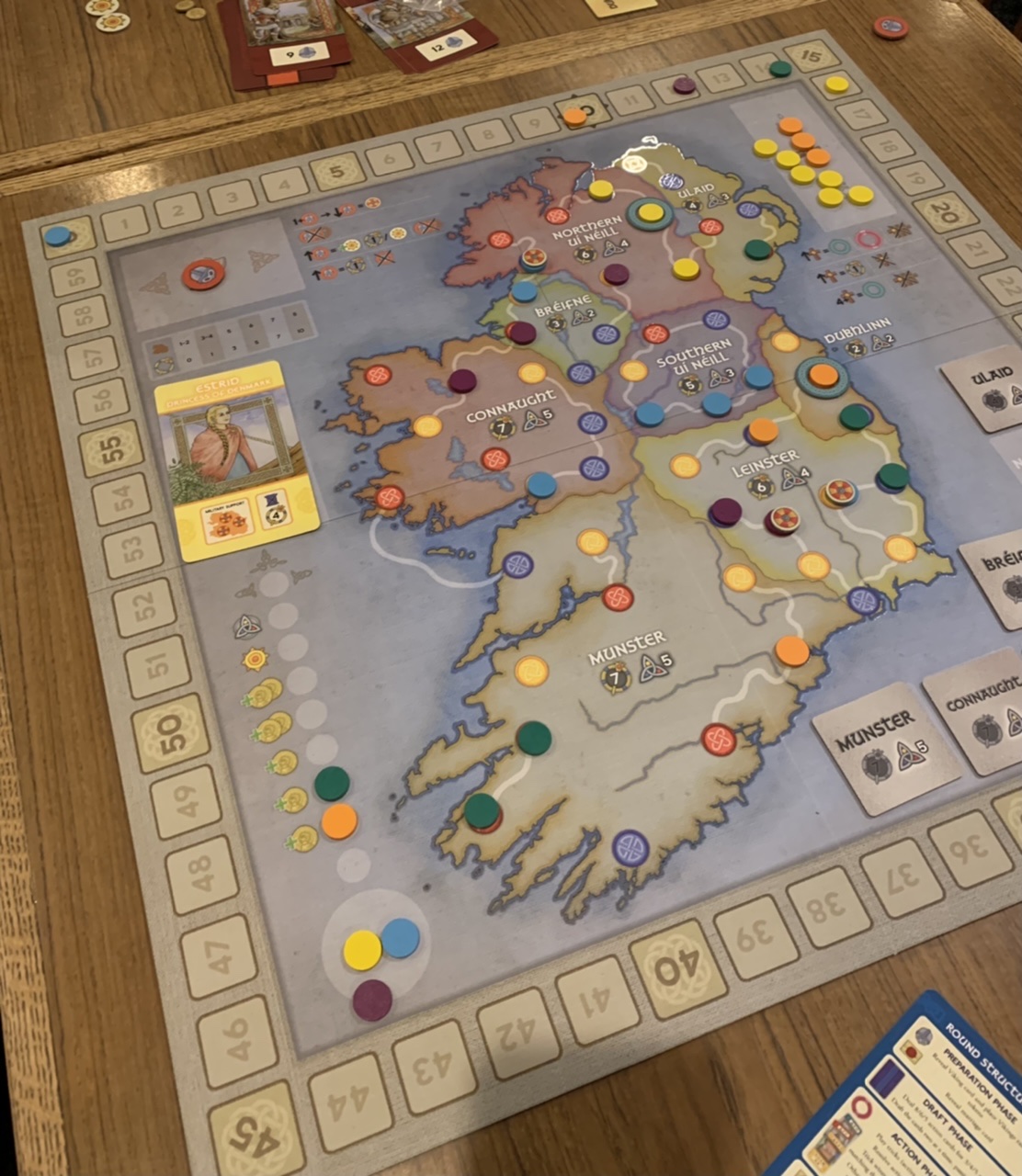
brian boru is a combination of card drafting and trick taking. to win you need to claim cities, defend against vikings, build monasteries and make political marriages. even with five players play is brisk. after one playthough my advice is to not be the player with the weakest defense against the vikings—it cost me a card every round to free the captured city.