This action will delete this post on this instance and on all federated instances, and it cannot be undone. Are you certain you want to delete this post?
#ktistec 211 hashtags

Todd Sundsted posted Dec 2, 2020
Running Ktistec the First Time
One of Ktistec's design goals is to make installation and configuration as easy as possible. Rather than multiple supporting data store services, Ktistec uses Sqlite. The database, along with uploaded images, are stored on disk, for easy setup (and, more importantly, backup).
When you run Ktistec the first time, you'll set up the instance, and then you'll set up the primary account.
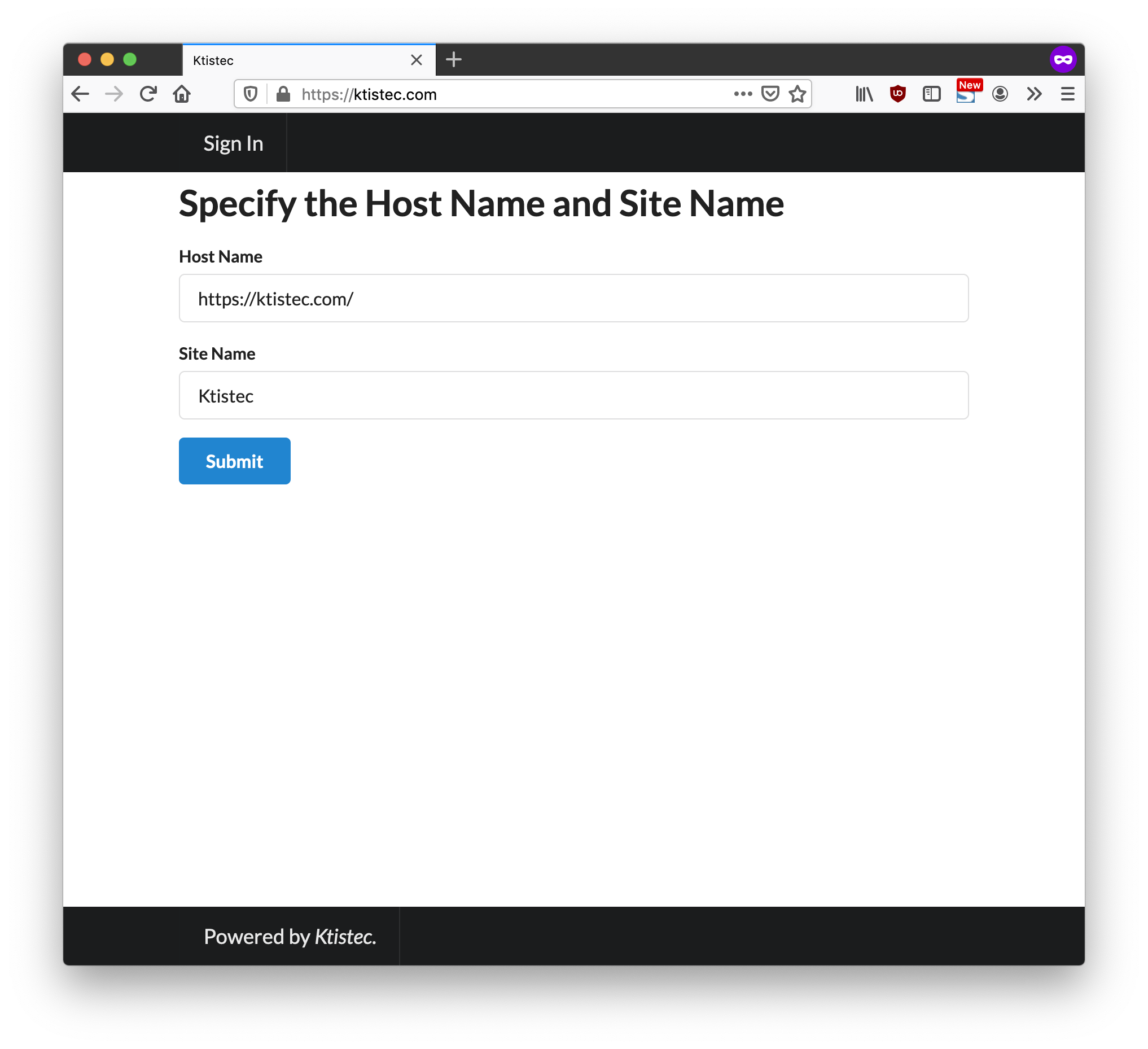
Ktistec needs to know the name of its permanent home on the internet. The host name is part of the identity of every account on the instance. My identity is "toddsundsted@epiktistes.com"—other federated hosts, and users, send messages and other content to me at "epiktistes.com". (This means you'll need a domain of your own, too.) Give the instance a site name and submit.
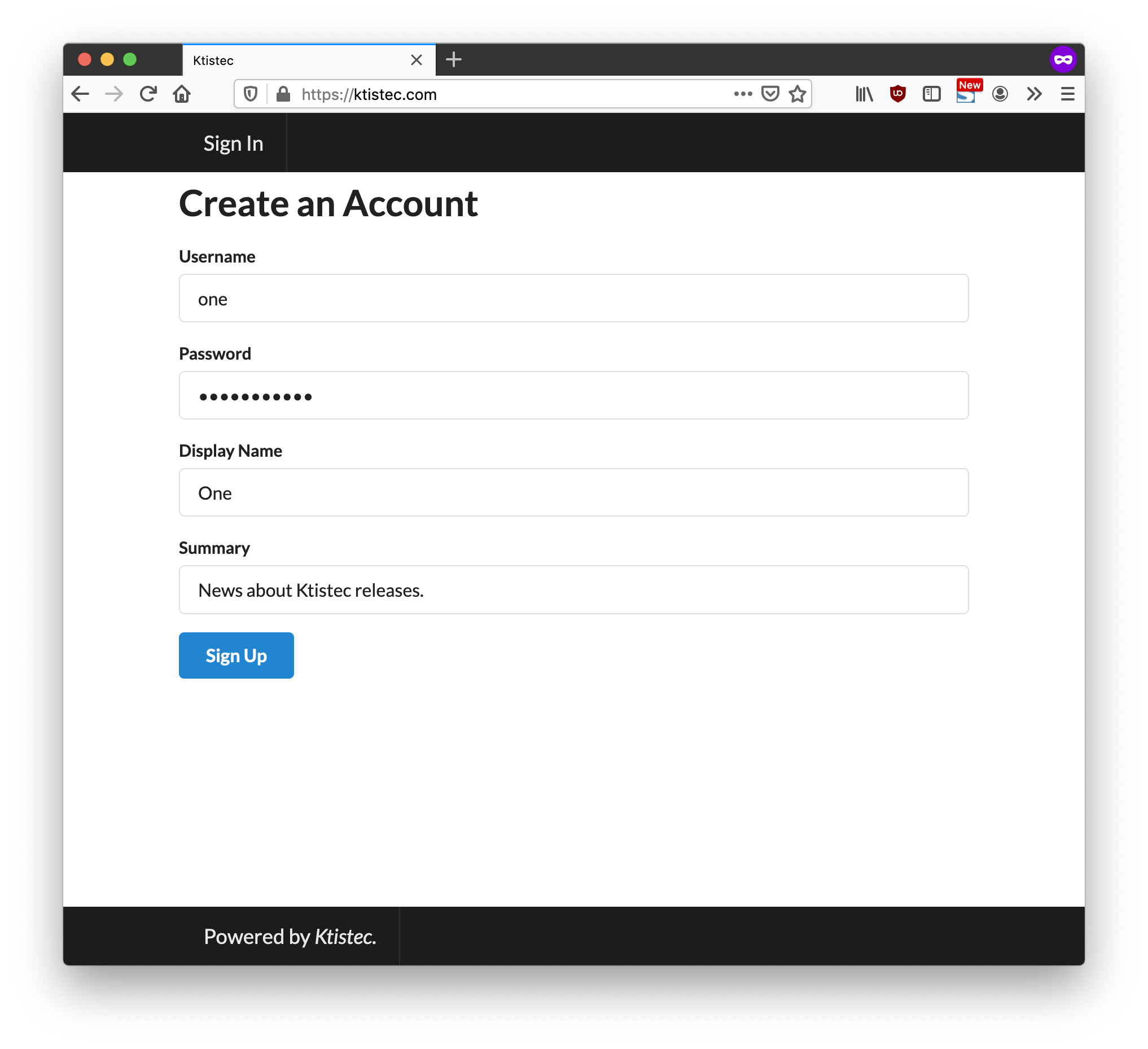
Once you name the instance, you create the primary account. Ktistec current supports only one account. This is intentional—another one of Ktistec's design goals is to promote a more fully distributed fediverse. A fediverse with a handful of large, multiuser services isn't a whole lot better than the world we had before, imo. (But don't worry—secondary accounts are on the roadmap.)
At a minimum, you need to specify the username and the password of the account. You can use a single character for the username, but you'll need six characters that include both letters, numbers and symbols for the password. Display name and summary are optional.
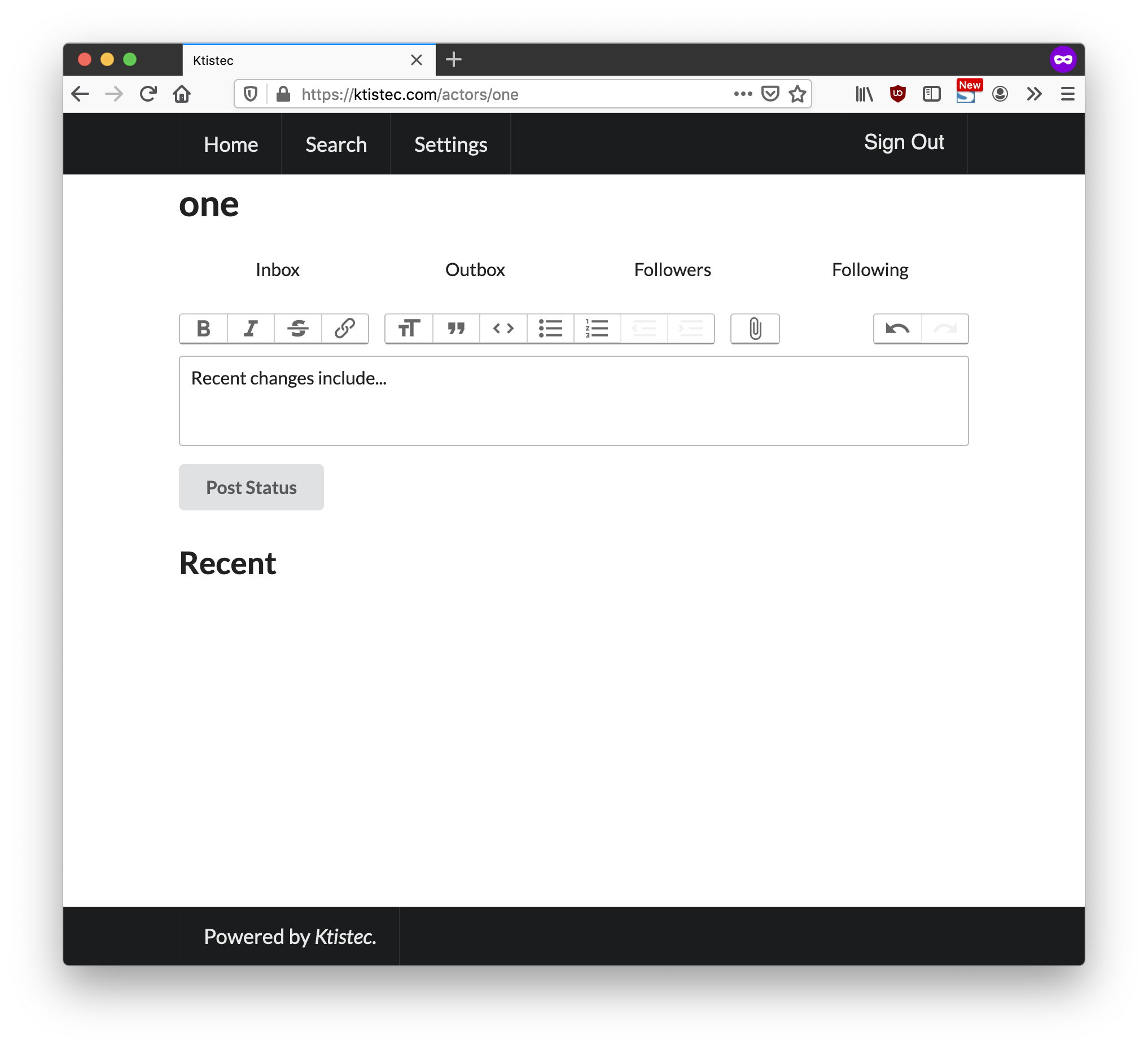
Once those two steps are done, you're online!
Todd Sundsted posted Nov 25, 2020
a fistful of improvements to ktistec
- 6d1925b track a recent mastodon change that requires a signed digest on http posts
annoying—epiktistes wasn't successfully federating with mastodon servers for days—but breaking compatibility in the interest of better security is an acceptable excuse (but don't get me started). - bd6fb4d log encountered uncached external contexts
ktistec parses and caches the contexts it cares about and ignores everything else. this change drops a message in the log when the server encounters contexts it doesn't know about. - 1661226 wire in post reply and delete buttons
posting is de rigueur for membership in the fediverse. deleting is just a good idea.
Todd Sundsted posted Nov 16, 2020
i put the finishing touches on content editing and presentation.
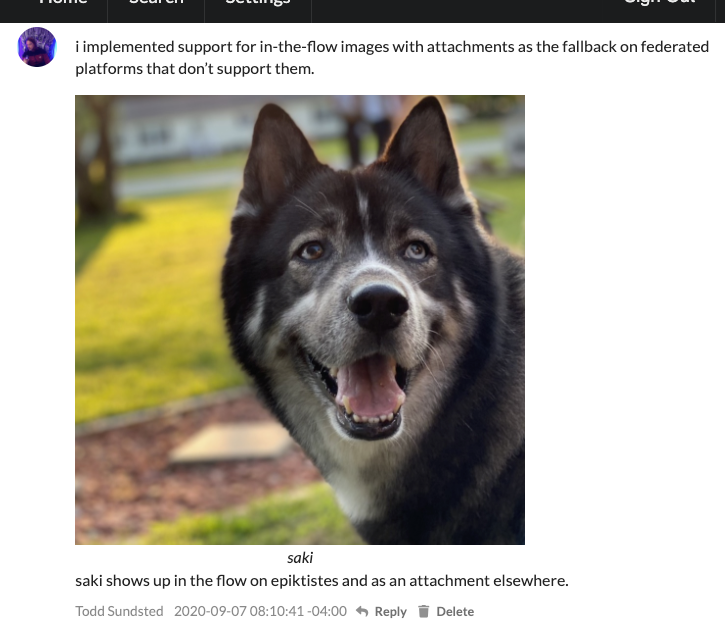
because i want to support long form content, one of my goals was inline images that present as attachments on other implementations like mastodon. my choice of editor, trix, handles image uploads, which is nice, but the generated markup is verbose and suboptimal (trix uses br instead of p tags to break up text into paragraphs, for example).
Todd Sundsted posted Nov 15, 2020
with open source software, things break but you can get in under the hood to investigate and fix. a recent, breaking change to signatures in mastodon recently broke ktistec federation. a few hours and a few commits later, things were working again. of course, i would have been happier if it hadn't been a breaking change... 😐
Todd Sundsted posted Nov 6, 2020
i just pushed commits that add a settings page and handle image uploads (for background image and profile icon). a lot of code was already written and supported image upload from the editor—i just had to bend it to my purpose. i'm using FilePond to handle preview and upload in the browser.
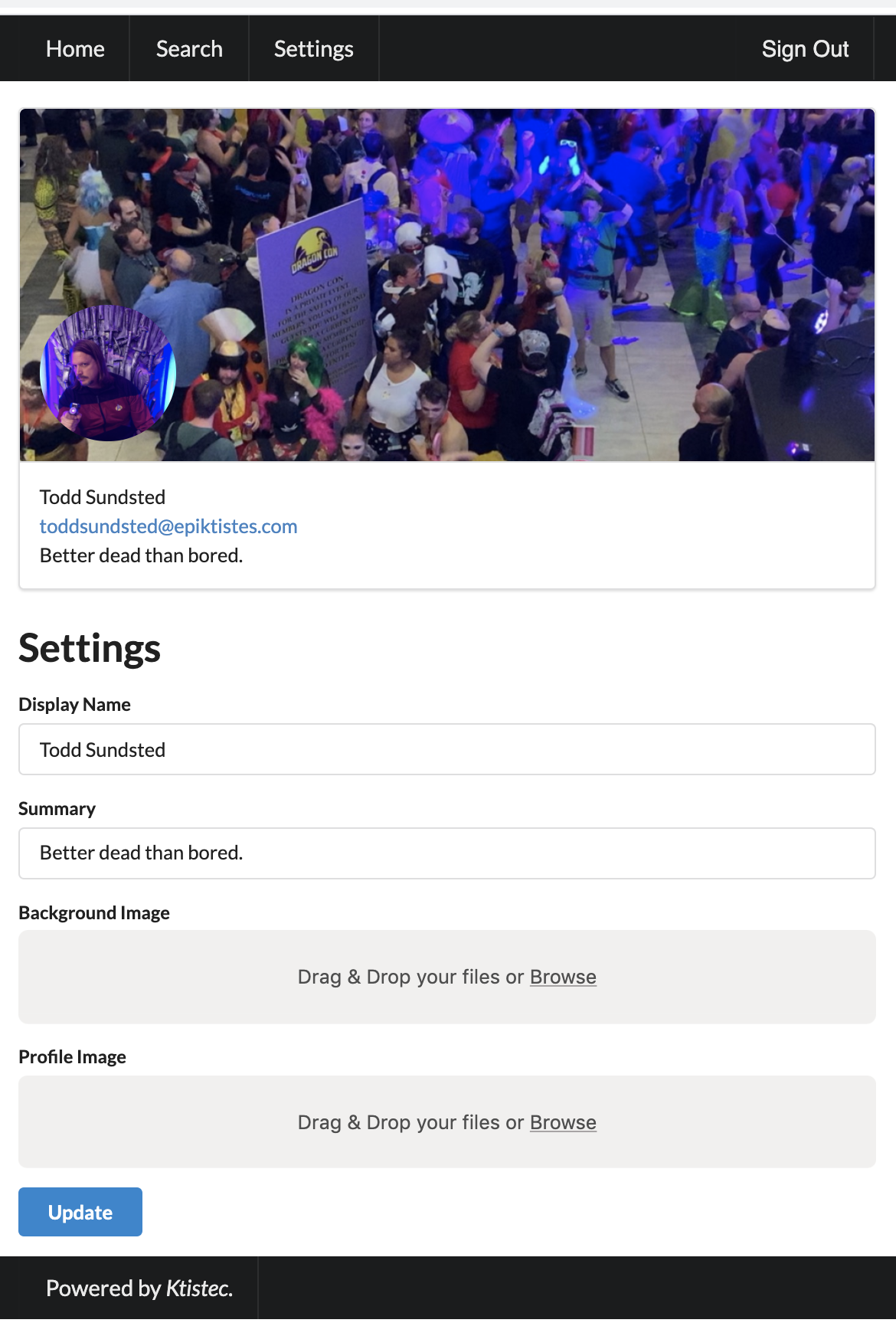
generally, i'm pretty happy with the result!
Todd Sundsted posted Oct 16, 2020
i posted about the problems caused by the lack of a clear license a week ago. commits ca662ca through 49d3e2a remove the kemal-session and kemal-csrf shards and replace them with lightweight improvements to a session store i'd written previously and forgotten about and cut-and-paste reuse of kemal-csrf (which has a clear license and clean history). ktistec will be released under AGPLv3.
Todd Sundsted posted Oct 14, 2020
these commits show the actor's public posts when an anonymous user navigates to the site, and show the authenticated actor the content timeline for both their inbox and their outbox. these are really two big queries with a pagination scheme i found on the internet. i haven't yet benchmarked it against the common "OFFSET LIMIT" method.
Todd Sundsted posted Sep 24, 2020
Todd Sundsted posted Sep 7, 2020
i implemented support for in-the-flow images with attachments as the fallback on federated platforms that don’t support them.

saki shows up in the flow on epiktistes and as an attachment elsewhere.
Todd Sundsted posted Aug 26, 2020
epiktistes runs on ktistec (still no README). the choice of crystal and sqlite has worked out really well. a small fully threaded conversation using a recursive query took 9.55ms to retrieve and render.