This action will delete this post on this instance and on all federated instances, and it cannot be undone. Are you certain you want to delete this post?
Todd Sundsted
toddsundsted@epiktistes.comBetter dead than bored.
toddsundsted@epiktistes.comBetter dead than bored.
| Introduction | https://epiktistes.com/introduction |
|---|---|
| GitHub | https://github.com/toddsundsted/ktistec |
| Pronouns | he/him |
| 🌎 | Sector 001 |
Todd Sundsted posted Oct 3, 2025
Release v2.4.16 of Ktistec
Release v2.4.16 of Ktistec... because I forgot to include some critical code in v2.4.15... namely, the menu.
Changed
- Reorganize the admin menu.
If you're not planning on adding additional users, you don't need to update!
Todd Sundsted posted Oct 2, 2025
Release v2.4.15 of Ktistec
Experimental support for multiple users landed with Ktistec release v2.4.15. "Experimental" means that it works for me, but hasn't seen enough testing for me to call it "ready for production". With that said, it's unlikely you'll lose your data.
There are lots of intentional design decisions that fit my vision for Ktistec but may surprise you. Here they are:
Every user is an administrator. That doesn't mean users have access to each other's posts and data, but it does mean all users have access to the shared parts of the site—they can change the site description, for example—and they can add new users. So only add people you trust.
If you want to add another user, create an account for them and give them their username and password. There is no self-registration. There are no invitations.
Beyond adding a user, there is no support for user management. You can't even boot a user from your site. Users can delete themselves, however.
There is no support for content moderation. Only add people you trust.
TL;DR Multi-user support in Ktistec is suitable for small teams, families (biological or chosen), and your personal avatars. There are better tools for online communities.
Here's the full set of changes:
Added
- Add support for multiple user accounts.
Fixed
- Hide attachments behind the summary. (fixes #125)
- Mark actors as up after refreshing their profile.
Todd Sundsted posted Sep 29, 2025
multi-user support in #ktistec is almost there. it turned into a yak-shaving endeavor, as these things often do—i ended up rewriting state management in the rules engine. i guess i thought class-level state was the right way to do it... 🤯
just a few more bugs to go...
Todd Sundsted posted Sep 27, 2025
Todd Sundsted posted Sep 24, 2025
Release v2.4.14 of Ktistec
Release v2.4.14 of Ktistec is small in terms of features and fixes, but it improves in two areas where I thought Ktistec was weak: light/dark mode support and autosave.
I'm not hardcore dark mode, but I do prefer it in some cases. Ktistec selects light or dark mode based on the browser or system setting—there is currently no means to select the mode directly. A nice side effect of light/dark mode support is that custom theming support comes nearly for free.
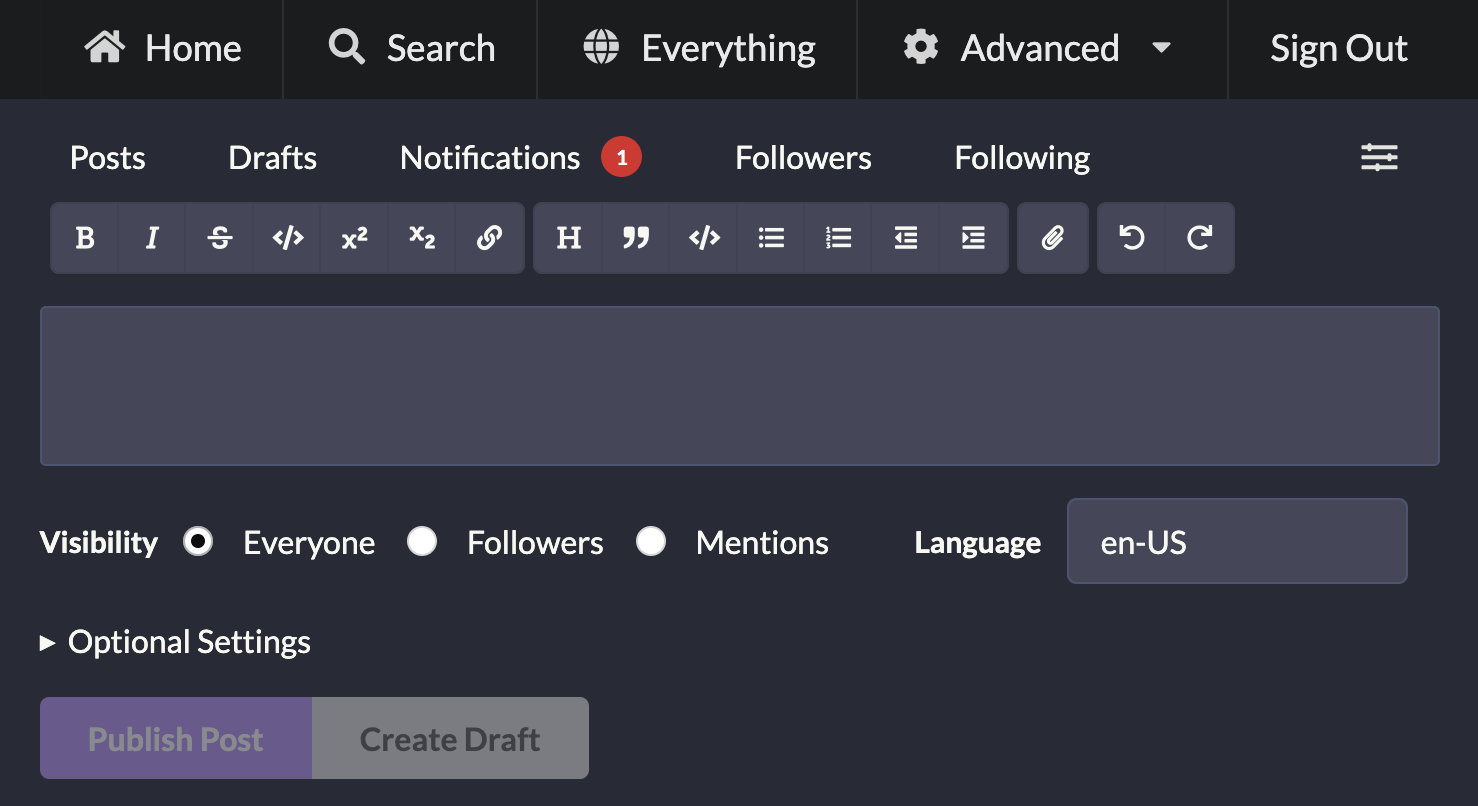
Ktistec was meant for writing. I post my fair share of one-line bits of wisdom, but I started building Ktistec because I wanted a space to write long form, and existing Fediverse platforms were more for social interaction. When writing long form, autosaving is an essential feature. Ktistec will now autosave draft posts and replies. If you navigate away before publishing, you can always find the incomplete draft in the Drafts collection which is accessible from your timeline page.
Added
- Add design system page for previewing UI elements.
- Support custom themes with automatic light/dark mode switching.
- Add autosave functionality for new posts, draft posts, and replies.
Changed
- Add external link indicators.
Todd Sundsted posted Sep 22, 2025
don't confuse Ruby and Rails
Todd Sundsted posted Sep 22, 2025
thankfully, the new ios 26 liquid glass user interface doesn't look nearly as bad as many of the photos made it look. it feels like a little nod to the skeuomorphic designs of years past...
Todd Sundsted posted Sep 21, 2025
After much pain, I have light-mode, dark-mode, and themes support in #ktistec. To celebrate, I implemented the Dracula theme.
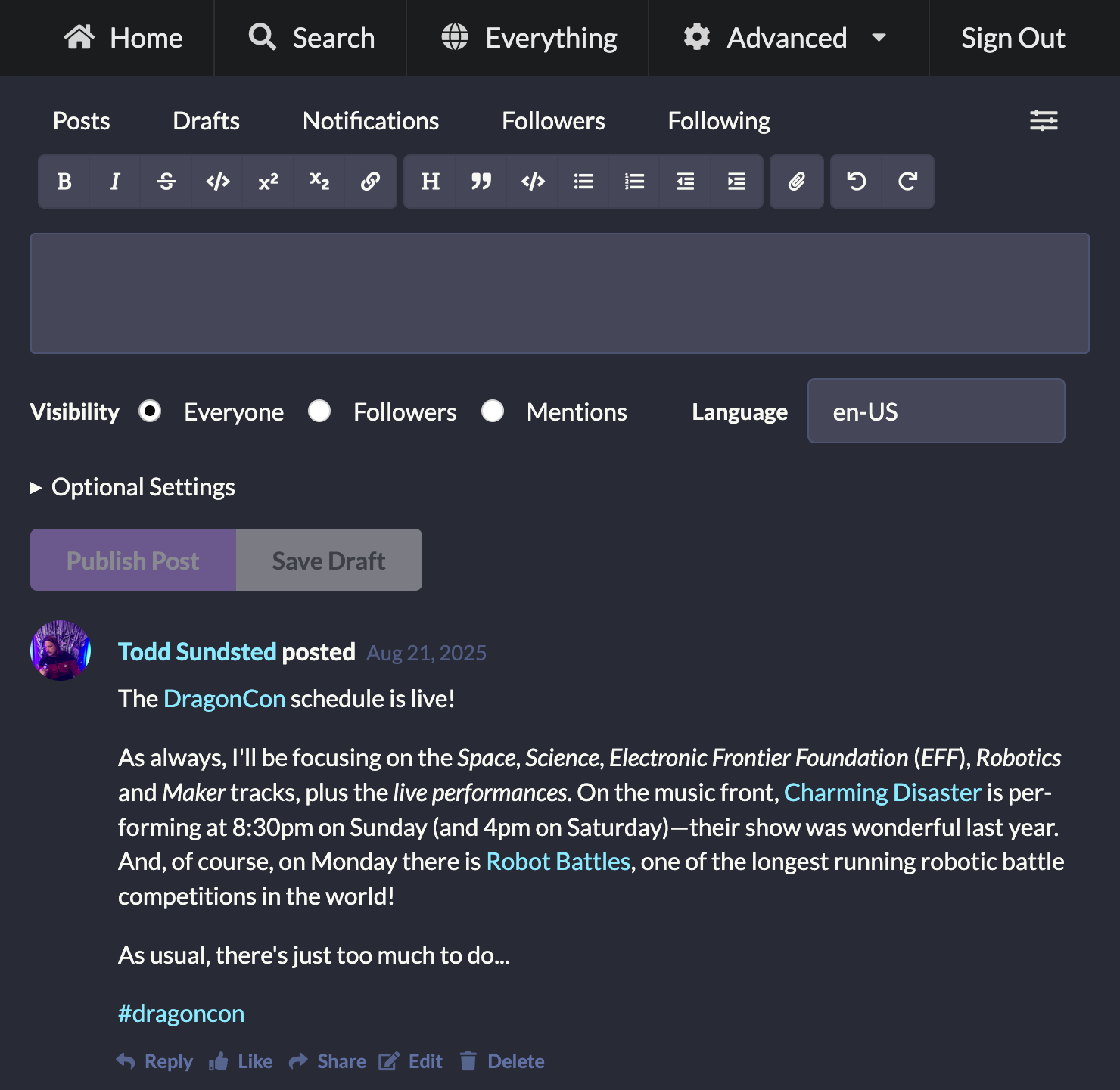
Theme support was brought to you by Mothership Connection, on repeat—when CSS ails you, funk is the cure.
Todd Sundsted posted Sep 21, 2025
the weirdest unsolicited things get sent to this server... i'm getting weather reports from a bot now. i don't follow it. no one shared or liked the posts. something is just dropping them into my inbox...
Todd Sundsted posted Sep 20, 2025
i removed over half of the custom colors i was using in the #ktistec user-interface. it may look slightly less interesting but it will be far easier to maintain.