This action will delete this post on this instance and on all federated instances, and it cannot be undone. Are you certain you want to delete this post?

Todd Sundsted
toddsundsted@epiktistes.comBetter dead than bored.
toddsundsted@epiktistes.comBetter dead than bored.
| Introduction | https://epiktistes.com/introduction |
|---|---|
| GitHub | https://github.com/toddsundsted/ktistec |
| Pronouns | he/him |
| 🌎 | Sector 001 |


Tokyo's "Extinct Media Museum" is quite nice, brings up many memories (phun intended..)
Todd Sundsted posted Sep 6, 2025


Week in Fediverse 2025-09-05
Servers
- WriteFreely v0.16
- Misskey v2025.8.0
- Mitra v4.9.0
- snac v2.82
- NodeBB v4.5.0
- Pixelfed v0.12.6
- GoToSocial v0.19.2
- Ktistec v2.4.11
- Lemmy Development Update August 2025
- Forgejo monthly report - August 2025
- Loops: The federated short video sharing platform
Clients
- PleromaFE v2.9.2
- Tuba v0.10.2
- Fread v1.6.1
- Pixelfed (React Native) v1.8.0
- Aria v1.3.7
- Pachli 3.0.0 starts now
Tools and Plugins
- Fedinesia v3.4.3
- feed2fedi v3.2.9
For developers
- TootSDK v19.0.0
- Fedialgo v1.1.19
- fediverse-pasture-inputs v0.3.1
- Mastodon.py v2.1.3
Articles
- Social Web Foundation is Betting Big on Client-to-Server API
- Fediverse Report – #132
-----
#WeekInFediverse #Fediverse #ActivityPub
Previous edition: https://mitra.social/objects/0198f75f-cf37-4cfd-72a1-8d24a40424a0
Todd Sundsted posted Sep 1, 2025

The smoke test worked. Account-level access control works. I'm pretty sure the remaining issues are all in the inbox/outbox pipeline—which is some of the oldest code in Ktistec.
Also, the issue with MAU is fixed in 740d3c28.
Todd Sundsted posted Aug 31, 2025
Heartbreaking discussion about the last 12 months at NASA. As one panelist put it: “A lot of smart people who think about the future. Where are they going?”


A.C. Charania, Scott G.C. Edgington, Les Johnson, Trina L. Ray, Kim Steadman (not in order)
The sobering realization is how much has changed since Dragon Con twelve months ago.
Todd Sundsted posted Aug 30, 2025
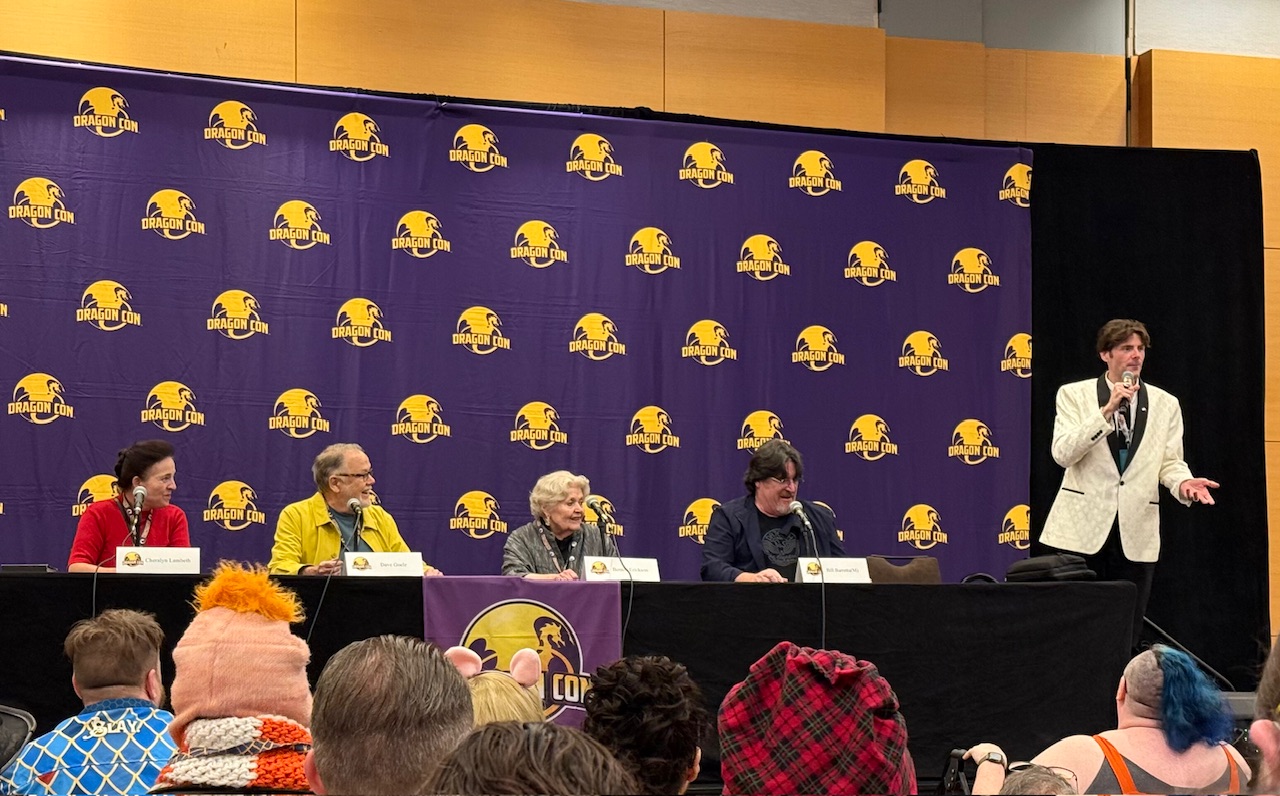
I grew up with Sesame Street and the Muppets, but I never spent much time thinking about the talent behind the scenes. This panel featured some of that talent:
Cheralyn Lambeth
Costume construction for the Muppets Christmas Carol and other Muppet productions
Dave Goelz
Original Muppet performer, voice of Gonzo and Dr. Bunsen Honeydew
Bonnie Erickson
Designer and builder of many iconic Muppet characters including Miss Piggy
Bill Barretta
Muppet performer who voices Swedish Chef and Pepe the King Prawn
It was wonderful to hear their stories about this amazing movie and the Muppet characters—and how they each used their expertise to bring them to life!
Todd Sundsted posted Aug 29, 2025
Release v2.4.11 of Ktistec
Ktistec is taking steps toward supporting multiple users. The first (small) step removes the actor panel from the unauthenticated home page and replaces it with a site description. You can see this in action at epiktistes.com. The site description is managed on the settings page using the same rich text editor used to edit posts. See the README for more information.
Other changes in this release:
Added
- Support a "site description" on the unauthenticated home page.
- Support autofocus on onboarding and authentication forms.
- Add
trix_editorview helper.
Changed
- Remove accounts from unauthenticated home page.
- Persist timeline filters in session.
Fixed
- Exclude abstract classes from
all_typesoutput. (fixes #104) - Work around bug in
at_beginning_of_week. (see crystal-lang/crystal#16112)
Other
- Disable streaming updates on pages other than the first. (fixes #118)
- Pin Crystal version at 1.16.3 in Docker build. (see libxml_ext#1)
Week in Fediverse 2025-08-29
Servers
- ActivityPub for WordPress v7.3.0
- Castopod v1.13.5
- Ktistec v2.4.10
- NeoDB v0.12.1
- Vernissage Server v1.21.0
- Wafrn v2025.08.03
- Wanderer v0.18.0
Clients
- Pachli v2.16.0
- toot v0.50.0
- Fread v1.6.0
- Miria v3.0.0
- Blorp v1.9.20
- P2Play v0.9.4
- Pixelix v4.2.0
Tools and Plugins
- FediPhoto-Lineage v8.0
- Fedinspect: A desktop application for analysing fediverse server configurations and features
For developers
- BotKit v0.3.0
- Fedialgo v1.1.7
Articles
- SocialHub and the Substrate of Decentralised Networks
- Mastodon says it doesn’t ‘have the means’ to comply with age verification laws
- Fediverse Report – #131
-----
#WeekInFediverse #Fediverse #ActivityPub
Previous edition: https://mitra.social/objects/0198d36f-1abf-e0ca-d7f1-2017b3af8447
Todd Sundsted posted Aug 23, 2025
I looked at the schedule for the #dragoncon American Sci-fi Classics track and realized I must be old… 🤔
Todd Sundsted posted Aug 23, 2025
Release v2.4.10 of Ktistec
I'm trying to get through the backlog of bugs and features in my to-do list. Release v2.4.10 of Ktistec packages up several important improvements. The most impactful change is graceful server shutdown—I've never had a problem with shutdown leaving the database in a broken state, but prevention is the best cure.
Added
- Support manually refreshing actor information. (fixes #112)
- Add link to log level settings to the navigation bar.
Fixed
- Enable dragging source links to the address bar. (fixes #109)
- Fix missing reply/mention notifications for non-create activities.
- Ensure the network is up before attempting to refresh a page.
Changed
- Block actor handle and display name when actor or post is blocked.
- Gracefully shut down the server.
I'm considering adding lightweight multi-user support (invitation-only, not open registration). I'm interested in your thoughts on whether this would be useful.